
Circular No: 201/2025
Date: 7 November 2025
Dear Members of the Kuala Lumpur Bar,
We refer to our Circular No: 027/2025 dated 24 February 2025.
We would like to update members that the Kuala Lumpur Bar Committee (“KLBC”) had a meeting with the Chief Judge of Malaya, Yang Amat Arif Tan Sri Hasnah binti Dato’ Mohammed Hashim (“CJM”), the Managing Judges of the Civil Courts, Yang Arif Dato’ Nordin bin Hassan and Yang Arif Datuk Hanipah binti Farikullah and the Managing Judge of the Commercial Division, Yang Arif Dato’ Ahmad Fairuz bin Zainol Abidin on 8 October 2025. The meeting was attended by the Chairman of the KLBC, Nimalan Devaraja and the Co-Chairperson of the Civil Practice & Court Liaison Committee, Aarthi Jeyarajah.
The purpose of this meeting was to discuss the KLBC’s proposal on the Guidelines for the Mode of Hearings / Trials (“the Proposal”), which was submitted in January 2025. The meeting was convened by the CJM following a written request dated 17 September 2025 made by the KLBC to the Chief Justice and CJM, requesting that the Proposal that had been earlier issued, be re-considered. This was as the KLBC had received feedback from members that the mode of hearing for all matters had reverted back to being conducted physically without any option for it to be conducted online. The request was made as the KLBC appreciated that members would face difficulties, not only in attending matters at the Kuala Lumpur Courts if there was a full return by lawyers to the Courts, but also in managing multiple matters across different Courts/states, which may further contribute to the backlog.
Guidelines on the Mode of Hearings / Trials
During the meeting, it was conveyed to the KLBC that Judges are strongly encouraged to conduct matters physically, as it was found to be more effective and efficient. The intention of having the mode of conduct return to the physical mode was to enable the matters to be case-managed effectively, and to reduce the prolonged backlog of cases. The CJM also emphasised that it is beneficial, particularly for junior lawyers, to attend Court as it provides them with the opportunity to develop their advocacy skills and witness oral submissions of different Counsel on a myriad of subject matters.
Notwithstanding this, the CJM highlighted that there had been a circular (“surat penting”) dated 28 February 2025 that had been issued, following the initial proposed Guidelines submitted by the KLBC, allowing the following categories of matters to be conducted online, via Zoom:
(i) Hearing for uncontested originating summons;
(ii) Ex-parte applications that are not complex;
(iii) Recording of consent judgments;
(iv) Withdrawal of cases (if costs have been agreed); and
(v) Cases involving foreign witnesses (on a hybrid basis).
However, Judges still retain the discretion to have the matters listed above be conducted physically. The KLBC was further informed that Judges have the discretion to conduct matters online if an application is filed with a certificate of urgency or in cases where the lawyers involved in a matter are based in another state.
In this regard, members who wish to have their matters conducted online are required to make a request to the respective Judges or Courts together with valid reasons. Such requests will be subject to the discretion of the Judges and will depend on the nature and complexity of the case.
Members may click here to access the letter issued by the CJM for further information. In the meantime, the KLBC will continue engaging with the Judiciary on this matter to ensure that matters are conducted in an efficient and convenient manner for the benefit of all stakeholders.
Staggered Hearings
The Judges acknowledged that despite the standing direction for hearings to be fixed on a staggered basis, this was still not being implemented in an efficient and expedient manner to avoid lawyers having to wait for long periods for their cases to be heard in Court. KLBC will be working on a proposal on the manner of implementation of staggered hearings which will be submitted to the Judiciary for consideration.
Parking and security Check at the Kuala Lumpur Court Complex (“KMKL”)
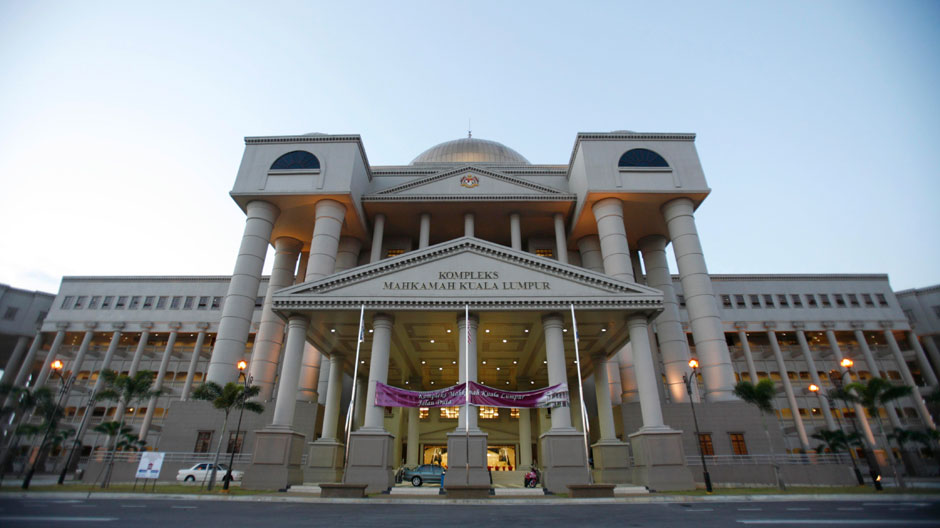
The KLBC has also highlighted members’ concerns regarding the insufficient parking at the KMKL as well as the limited access doors and strict security checks when required to attend to matters in KMKL physically. KLBC has suggested that allowing certain matters to be heard online may help reduce the number of lawyers required to attend Court physically.
The CJM informed KLBC that the Court has already provided the maximum number of additional parking spaces for lawyers within the Court compound. However, parking areas outside the KMKL premises are not under the Court’s control, as the land does not belong to the Courts. As an alternative, a small gate at “Post B” has been opened to provide easier access to the Court premises for members who park along Jalan Sultan Mizan Zainal Abidin which has a number of available parking spaces.
With regard to security checks, the CJM emphasised that these measures cannot be compromised for safety reasons, but assured that the process does not take long for lawyers to enter the Court premises. The Court is also not intending to open additional access doors, as the KMKL building is not designed in a way that ensures safety for those in the building if there are multiple access points.
Members are advised that if they are slightly delayed in attending their matters in Court, they should inform the interpreter via phone call or WhatsApp. The respective Judges may then adjourn the matter briefly until the lawyer arrives. Members are also encouraged to arrive at the Court complex early, to avoid any issue of delay due to the security checks.
Preparation for the Case Management
KLBC has also been advised that lawyers attending case managements must be well-prepared and have detailed knowledge of the subject matter of the cases that they are handling. Firms that assign junior lawyers to attend case managements must ensure that the junior lawyers are well acquainted with the facts and issues of the case, including the estimated number of witnesses and documents to be filed.
Members are also encouraged to avoid double-booking themselves for multiple matters and to manage their diaries responsibly.
Backlog of cases at the Kuala Lumpur Courts
The CJM shared that the backlog cases in Kuala Lumpur Courts is being managed and with the increasing number of Judges and Judicial Commissioners, there should be less delays in having matters heard and disposed of. The KLBC has also been informed that cases currently fixed for trial in 2028 or 2029 may be rescheduled to earlier dates in 2026 or 2027. Members with trials currently scheduled in 2028 or 2029 are advised to make the necessary preparations in the event such trial dates are brought forward.
Aarthi Jeyarajah
Tay Kit Hoo
Co-Chairpersons
Civil Practice & Court Liaison Committee